Malawians' first attempt at an Egyptian-style protest fizzled before it even began today. Check out the article here.
From what I gather from people whose offices look out over the march starting place, dozens of protesters were prevented from getting to the area by hundreds of policemen. No violence, but no march either. Of course, it is easiest to stop a march when you remove the leadership. So, first thing this morning, the leader of the protest was arrested by the police and held in custody. I believe that he has now been released.
Malawi does not have a history of revolution or uprising. Still, this is an interesting foray into activism for many folks around here. Although the march did not happen, it did get people talking about politics and leadership -- two things that are usually reserved for hushed conversations among close friends. We'll all just have to watch and wait to see what, if anything, happens. For now, I am still just waiting for gasoline...
Monday, February 14, 2011


Saturday, February 12, 2011
Shameless self promotion...
For those of you (mom and dad) waiting on the edge of your seat for the publication of my 2nd dissertation paper, wait no more! "It’s not just who you are but where you live: An exploration of community influences on individual HIV status in rural Malawi" is finally available in print! It only took 18 arduous months from the initial submission date to acceptance at Social Science and Medicine, one of the most prestigious journals for international, interdisciplinary research (and I am not just saying so myself!).
For those of you still reading, here is the abstract:
And, for those of you still interested (mom and dad), I would be happy to send you a watermarked copy for you to add to your beach (or bathroom) reading list.
For those of you still reading, here is the abstract:
Abstract
Approximately 1 million people are infected with Human Immunodeficiency Virus (HIV) in Malawi. Despite efforts aimed at changing individual risk behaviors, HIV prevalence continues to rise among rural populations. Both previous research and the Political Economy of Health framework suggest that community-based socio-economic factors and accessibility may influence HIV transmission; however, these community factors have received little empirical investigation. To fill this gap, this research uses data from a nationally representative probability sample of rural Malawians combined with small area estimates of community socio-economic and accessibility data in logistic regression models to: 1) reveal relationships between community factors and individual HIV status; 2) determine whether these relationships operate through individual HIV risk behaviors; and 3) explore whether these associations vary by gender. Community socio-economic factors include relative and absolute poverty; community accessibility factors include distance to roads, cities, and public health facilities. Individual HIV risk behaviors include reported condom use, sexually transmitted infections, multiple partnerships, and paid sex. Results show that higher community income inequality, community proximity to a major road, and community proximity to a public health clinic are associated with increased odds of HIV for women. For men, community proximity to a major road and community proximity to a public health clinic are associated with increased odds of HIV infection. These direct relationships between community factors and individual HIV status are not mediated by individual HIV risk behaviors. The Political Economy of Health frames the discussion. This study provides evidence for expanding HIV prevention efforts beyond individual risk behaviors to consideration of community factors that may drive the HIV epidemic in rural Malawi.
And, for those of you still interested (mom and dad), I would be happy to send you a watermarked copy for you to add to your beach (or bathroom) reading list.
Gas: sometimes you have it, sometimes you don't
No, not that type of gas. This time, it is the real thing, the important thing: petrol. Malawi has no gas now, and it has very little diesel. The lines for the gas stations, almost all of which are empty, wrap around the roundabouts, line the streets, and cause a traffic nightmare for the 7 remaining people who have fuel to get around. People are sleeping in their cars in queue, waking up to push their cars a few meters, grateful to receive the precious 10 liter rations of gas as if it were manna from heaven. These folks really are the lucky ones as they are actually already in line when the petrol trickles in. The social networks and SMS lines are busy is response: people sharing hints and news of where petrol is or where petrol is rumored to be. Many are out of gas just from searching the city with their last remaining liter.
 Of course, fuel shortages clearly affect more than just individual mobility: there are shortages of goods and services as businesses and transportation companies also suffer. Everyone is unhappy. And gas costs a fortune here anyway: upwards of $7/gallon [we won’t be listening to our USA friends’ complaints of $3/gallon gas ever again!]. A planned march on Monday, Egypt style, is focused on the gas shortage and the links to the country’s lack of foreign exchange to pay the petrol dealers.

Personally, we are doing okay. Initially, Jon thought that I was exaggerating the frequency of the fuel shortages, but as this is the 4th time the city has been dry in about 3 months, we now religiously adhere to the half tank rule [I try to fill up at ¾ tank!]. As we both heard rumors of this crisis last weekend, we both fueled up and each have more than ½ tank left to get through this latest mess. Still, with no fuel in sight, and no desire to spend 14 hours in the car in line for gas, we too are feeling the pinch. No weekend hiking trip for us; no trip to the beach; carpool only; strong preference for foot travel. Jon leaves on Monday, and although I am sad about that, there is one silver lining: having access to two cars with ½ tank gas, each, gives me a nice gas cushion to get around for another couple of weeks. Other folks, not so lucky.
Saturday, January 29, 2011
Our first............................felony????

According to the new, proposed Local Courts Bill under review in Malawi’s Parliament, public flatulence (aka: farting) will be an offense punishable by a minimum of 6-months in jail. Now, although this will make 12-year-old boys (and, honestly, most of us) giggle, the passage of natural bodily gas is no laughing matter around this house. Between the parasites, the amoebas, the schistosomiasis, the cabbage and beans, we are truly at risk of being accused, and convicted, at any time. Our risk of confinement aside, the article in the Nyasa Times is hysterical, and hysterically written. You really should check out the comments at the end.
And, if that is not enough, other “crimes” that would now carry a mandatory jail term include:
“Pretending to tell fortunes”
“Insulting the modesty of a woman”
“Carrying offensive weapons without lawful authority or reasonable excuse”
“Challenging to fight a duel”
“Dealing in poisonous substances in negligent manner”
Public response is mixed. "'How can this government criminalise the release of intestinal gases …. Everyone does that, even if it’s in public or it has an accompanying sound which is boring, making it criminal is a joke of democracy.' Another said he, 'support(s) the bill and is welcome. Sometimes breaking wind in public or during meetings is a disturbance of the peace.'"
Sunday, January 23, 2011
Alternative uses for your antiretrovirals...
So, we all know that antiretrovirals (ARVs) help people living with AIDS live longer, more healthful lives, and that these life-saving drugs are becoming more readily available all over sub-Saharan Africa. In Malawi, of the approximately 1 million infected, over 200,000 people started ARVs since 2004-- a pretty amazing feat! Still, with the increase in access to these drugs, and their low or no cost to those in need, come some surprising downsides.
Two alternative, and highly discouraged, uses of ARVs have been circulating around work recently:
1. Ever wonder how those bony chickens in the markets have such large breasts? Seems that some individuals might be feeding their poultry ARVs with the hopes of giving them the same fatty deposits that some people get as a side effect of the HIV drugs, called lipodystrophy. Lipodystrophy typically causes fat loss in the arms, legs, and face while creating fatty deposits on the breasts, stomach or back of the neck. Sadly, you can see how some folks might think that these drugs would act like steroids for poultry.
2. And, for those who are fed up with being high on life, it seems that ARVs can be used to just get high. In South Africa, ARVs are purportedly being used to lace a marijuana-based drug popular with the 'tweens and club scene. Seems that some people in South Africa are being robbed of their ARVs by gangs who can use the drugs in their more potent cocktails.
Anyone else heard some other amusing tales of ARV abuse??
Sunday, January 9, 2011
From game viewing to game eating: Namibia, part 2
From the wilds of Etosha, and camping in a hot tent, Jon and I moved on to visit my UNC roommate, Karie, at her partner (Byron) at the game reserve where he is the hunter-in-chief. Having passed the test of both Ganja the dog and Musket the extra-fat cat, we settled down for hours of delicious coffee, conversation, and homemade bread in their cozy garden. After some gender-segregated afternoon activities (Jon headed off with Byron to feed the resident sable antelopes, while Karie and I took a much-needed girltime walk around the ranch), we all gathered around for an evening braii (BBQ) of tofu sausages for 2; enough meat for 12 (but it was also just for 2); garlic bread, salad, and stuffed squash. Scrumptious!


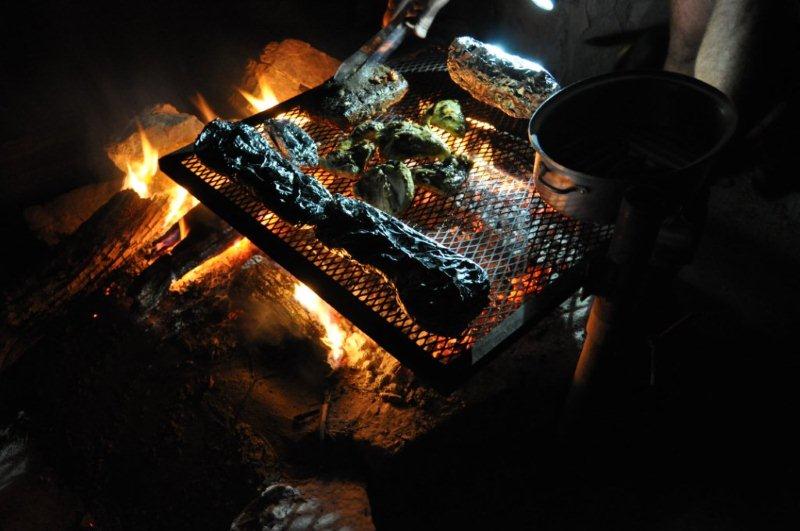


In the morning, Byron took Jon off in the helicopter to deliver a package to the neighbor – flying over an enormous herd of eland and various other animals (I was not saddened to be left out of the 2-seater craft). Then, all back on the ground, we headed off for a great day of sightseeing in the central north: the petrified forest with the welwitschia plants, a picnic near the sinkhole, Twyfelfontein’s 6,000-year-old rock art, and the rocks of the Organ Pipes. After a whirlwind 36 hours, we went our separate ways at the fork in the road – they headed back to the farm, and we headed off to Brandenberg. Thanks Byron and Karie!


Jon and I headed to Uis for the night, a mining ghost town we expected to be just a place to rest. But, the Brandenberg Rest Camp http://www.brandbergrestcamp.com/ was arguably our favorite place to stay! There, our new friends Bazel, Monti, and Joe introduced us to the Duppa – a snuff device aimed at facilitating the pathway of peachy mint snuff straight to the brain. Having a large man with a hammer ask you to put your nose on a hook next to gray powder is slightly unsettling, but Jon and I both like to “do as they locals do”. After passing the Duppa test, we settled down for some beers with the locals. Our best night! If even in Uis, you must all stay there.


From there, to the dunes and seaside town of Swakopmund! The town itself feels very European (and slightly boring), and we stayed in a lovely place, Alternate Space, full of naked images of the guesthouse’s owner. While there, Jon enjoyed one of his “top 10 meals of all time” at Lighthouse Restaurant – Kabeljou mariscal, fresh caught calamari, and their B1 chocolate cake with its molten caramel center – while I found a Thai-ish restaurant to have some vegetarian dumplings. The highlight of the stop was a desert tour from Tommy Tours – a half-day excursion into the dunes (with 24 other people) to learn more about the critters and sand formations. The guides and drivers were excellent, and we all enjoyed the chameleons, snakes, and lizards of the sand.


In the afternoon, we walked through the depressing graveyard – noting the beautiful German section; the small, but well-kept Jewish section; the trash-laden black section with no trees or headstones; and the mass graves of the Herero people from a 1904 massacre. Although it is easy for tourists to ignore in general, the cemetery was a rude reminder of the legacy of Apartheid in Namibia.
Then, after a provision stock up for pretzels at Traff Café and some groceries at Spar, we headed off for the dunes of Sossusvlei…


Saturday, January 8, 2011
Pretty as a picture....
No, not us. In fact, when I post my photos to my Picasa site, Jon and I (and most people that we know) are absent. I usually like to post my travel snaps on the blog with the stories behind them and my favorite photos on my photo web page. So, to save myself from uploading 70 photos to this site, I'll just link to my Picasa album, and you can check out my favorite shots of Namibia.
I sure did love taking them (and the 1000+ that did not make the cut). Enjoy!
I sure did love taking them (and the 1000+ that did not make the cut). Enjoy!
Friday, January 7, 2011
Eating: Jon and Caryl style
Before Jon opines on the wonders of Namibia over the weekend, and before I continue to extol its virtues, I will just share one photo that sums up the differences in our Namibia experience: check out our plates! This was at Joe's, Windhoek's "game" food restaurant.

I am not sure if the photo is more demonstrative of how much I must like Jon if I was willing to eat my final Namibia meal here or how much he just loves meat. Poor little zebras. Hmmmm....

I am not sure if the photo is more demonstrative of how much I must like Jon if I was willing to eat my final Namibia meal here or how much he just loves meat. Poor little zebras. Hmmmm....
Tuesday, January 4, 2011
Namibia - it's not called "Africa Light!" for nothing!
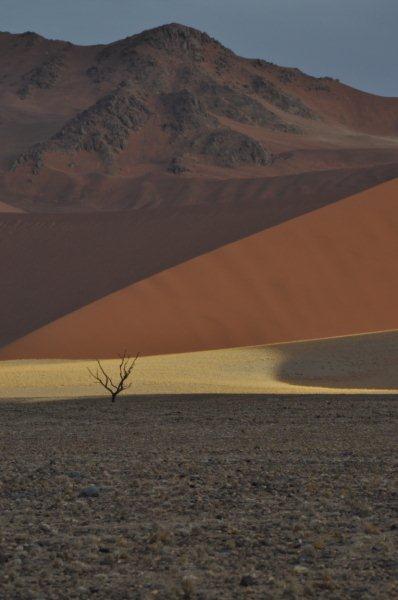
Fewer than 24 hours back home in Malawi, and I already miss the surreal serenity of vacationing in Namibia. More to come in the next week, including lots of amusing stories and photos. However, in the mean time, I’ll share some photos and thoughts of what I already miss: 


1. Soft, chewy, salty pretzels with seedy mustard
2. Clean streets with sidewalks and street signs
3. Major roads and highways with picnic areas complete with tables, chairs, shade and trash cans!
4. Drinking clean water straight from the tap
5. Eating salads at every meal – whether from our borrowed cooler or at any small café
6. Spending time with good friends
7. Fully stocked grocery stores with organic foods, veggie products, and delicious baked goods
8. Using credit cards so as to NOT carry around bags full of cash
9. Wide open spaces with stunning vistas of deserts and mountains
10. Not working!


To be fair, and to prevent the onset of depression, I am happy to return to:
1. The vibrant green of Malawi in the rainy season
2. Puppies: One with a chewed ear, but both are fine and thrilled to see us
3. Our own bed, off the ground and away from scorpions and sand
4. Fans for the heat (unlike our scotching tent)
5. Cooking on a real, not camp, stove!
6. Showering without shoes
7. The cacophony of bird songs that greet us every morning here
8. Music/BBC – Jon and I had to rely on Namibian radio for our trip – an amusing disaster
9. The stimulating chaos of Lilongwe and having people around
10. Home sweet home, safe and sound
Thursday, December 23, 2010
News flash: men prefer having sex to raising healthy kids!
Or, at least in Malawi, some men do. In a report a few weeks ago from the Daily Times, which I read bemusedly (humor over tears is my frequent approach here), the practice of spraying DDT in homes for malaria prevention was discouraged because it led to reduced sex drive among men.
There is a current ban on DDT in Malawi, so this article is rather mute. However, I guess some men got wind that health experts are trying to lift the ban as DDT has been shown highly effective in reducing malaria when sprayed (in low concentrations) on the walls of homes - check out an older CDC article here.
Malaria is a huge problem here. I don't know how many men die of reduced sex drive, but an estimated 12,000 people die of malaria every year in Malawi, most of them children.
Now, if you reject DDT use for its destruction of the environment or its general toxicity, I am fine with that. But, if you refuse to use DDT to fight malaria because you might have libido issues, I am slightly sickened.
And, that is why I need a vacation (and why I eat Pepto like candy).
Namibia, here we come! Happy holidays and Happy New Year to everyone!
Subscribe to:
Posts (Atom)